Launch offer — valid today only

📄 Digital book in PDF · read it on your phone or print it

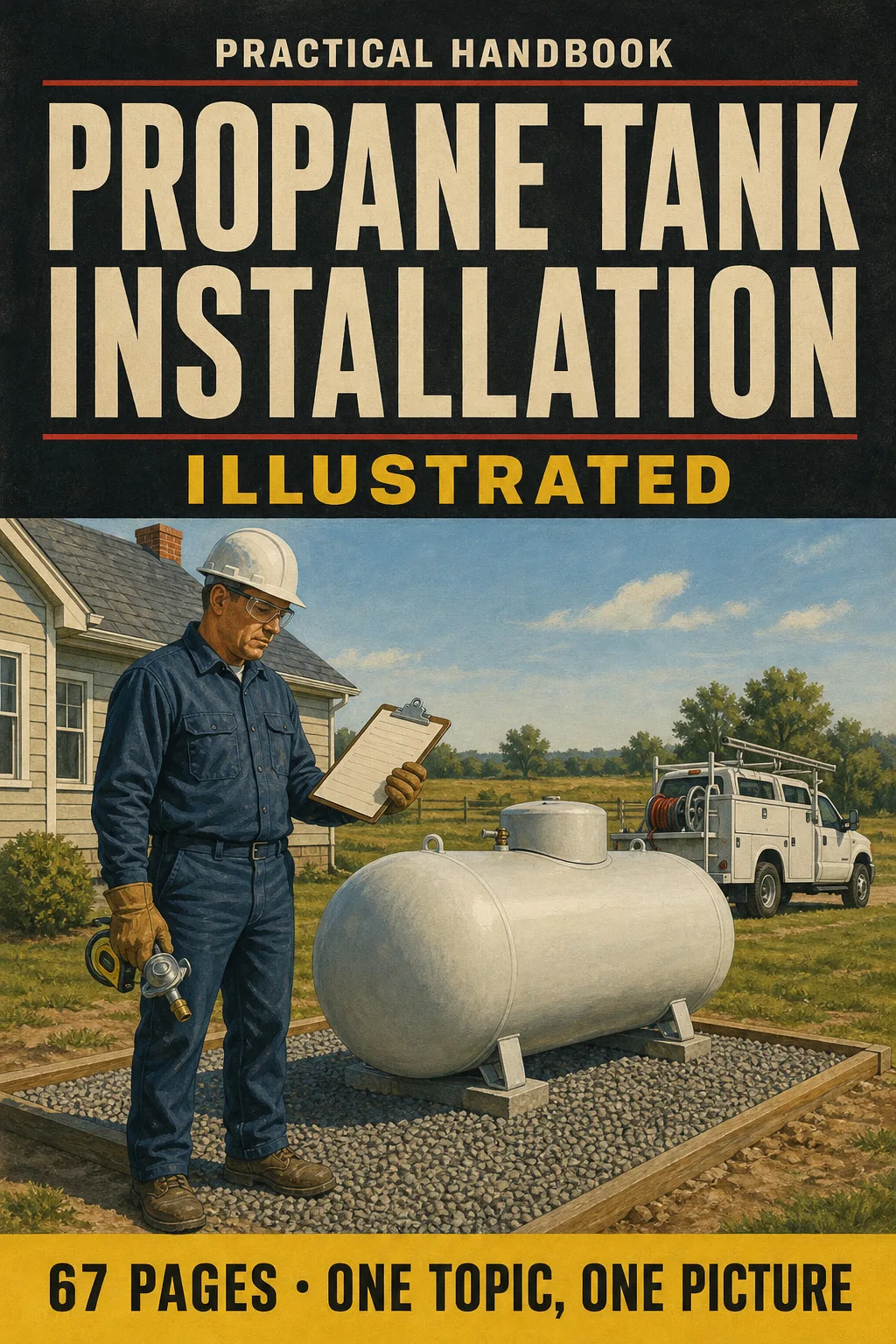
Propane Tank Installation in Drawings: From the Site Walk to Placing in Service, Step by Step One Topic on Every Page

Tank siting distances in feet, aboveground and underground setting, anodes, first- and second-stage regulators, line sizing, leak testing and placing the system in service. Each topic has its own page: the drawing first, then what you need to remember. 67 illustrated pages.

START STUDYING THIS WAY

🔒 Secure checkout · PDF by email · 30-day guarantee

Every topic, its own pageEach install step drawn, with the explanation right beside it
67 illustrated pages8 parts, from the whole system at a glance to the night-before review
Up-to-date sourcesNFPA 58 and NFPA 54, with a reminder to check your state's adopted edition
PDF by emailFormat

Look Inside the Book

Every page has one big drawing and a box with the distances, pressures and steps you need to know:

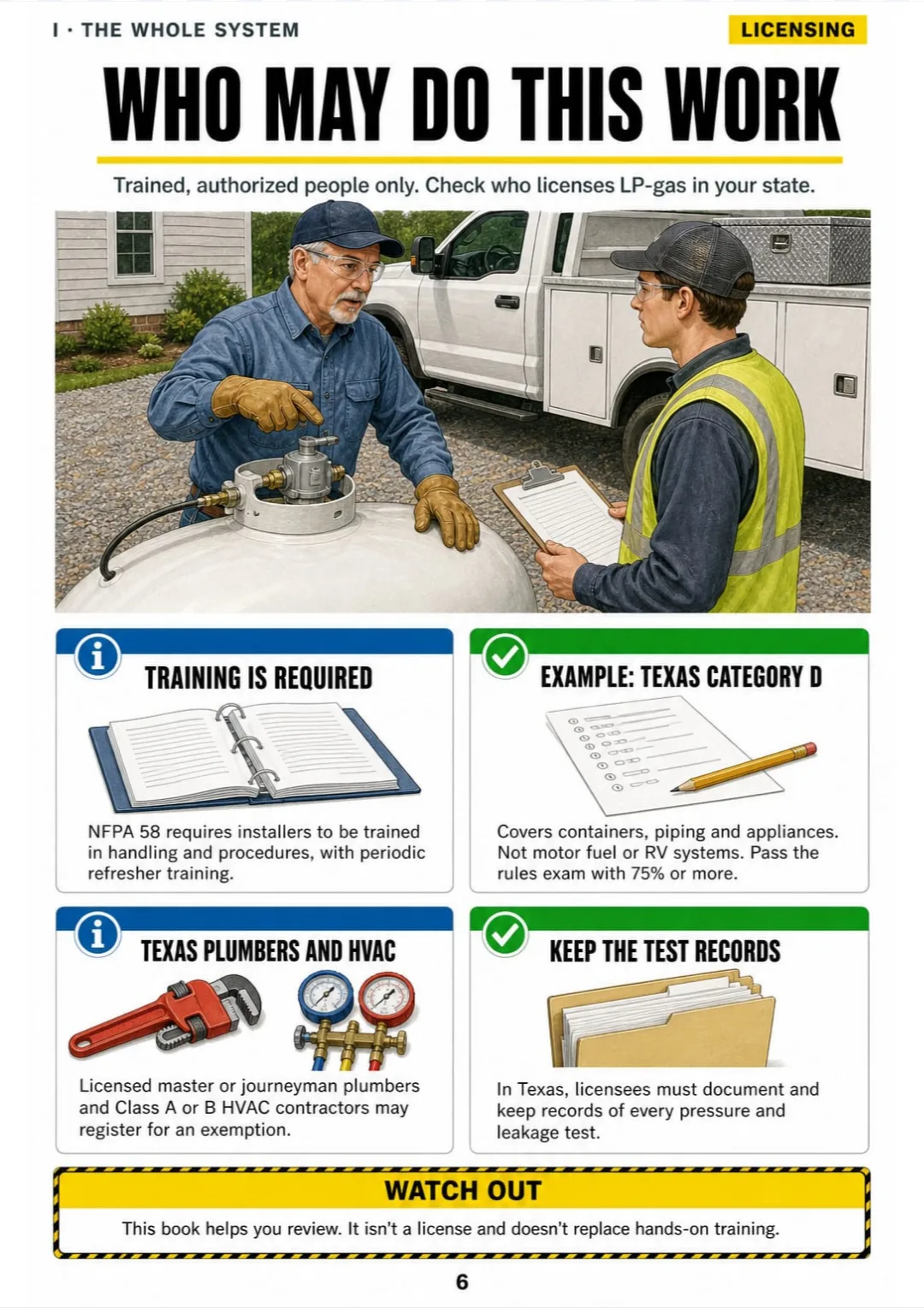
Texas example: Category D license, rules exam passed at 75% or more
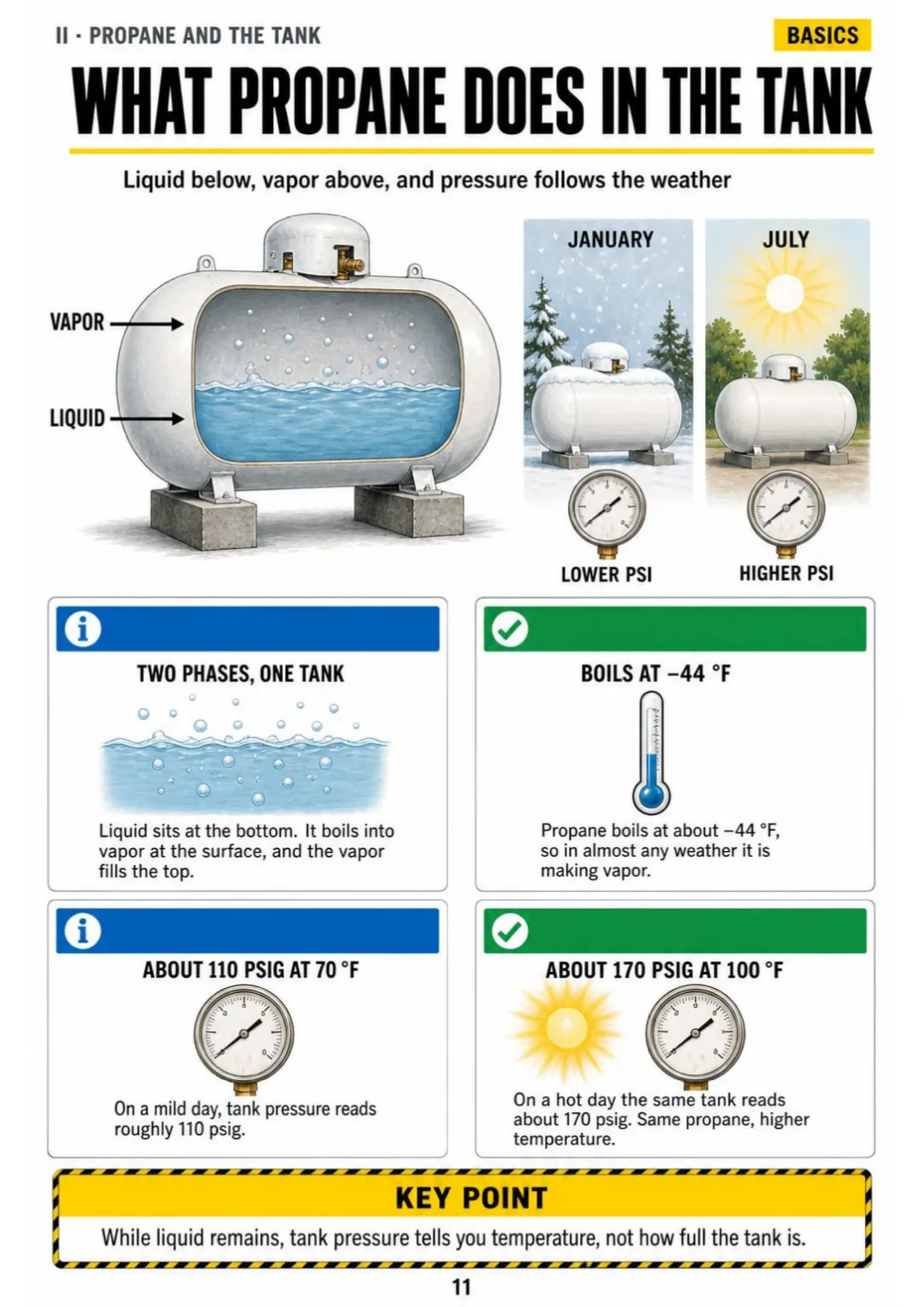
Propane boils at −44 °F: about 110 psig at 70 °F, about 170 psig at 100 °F.
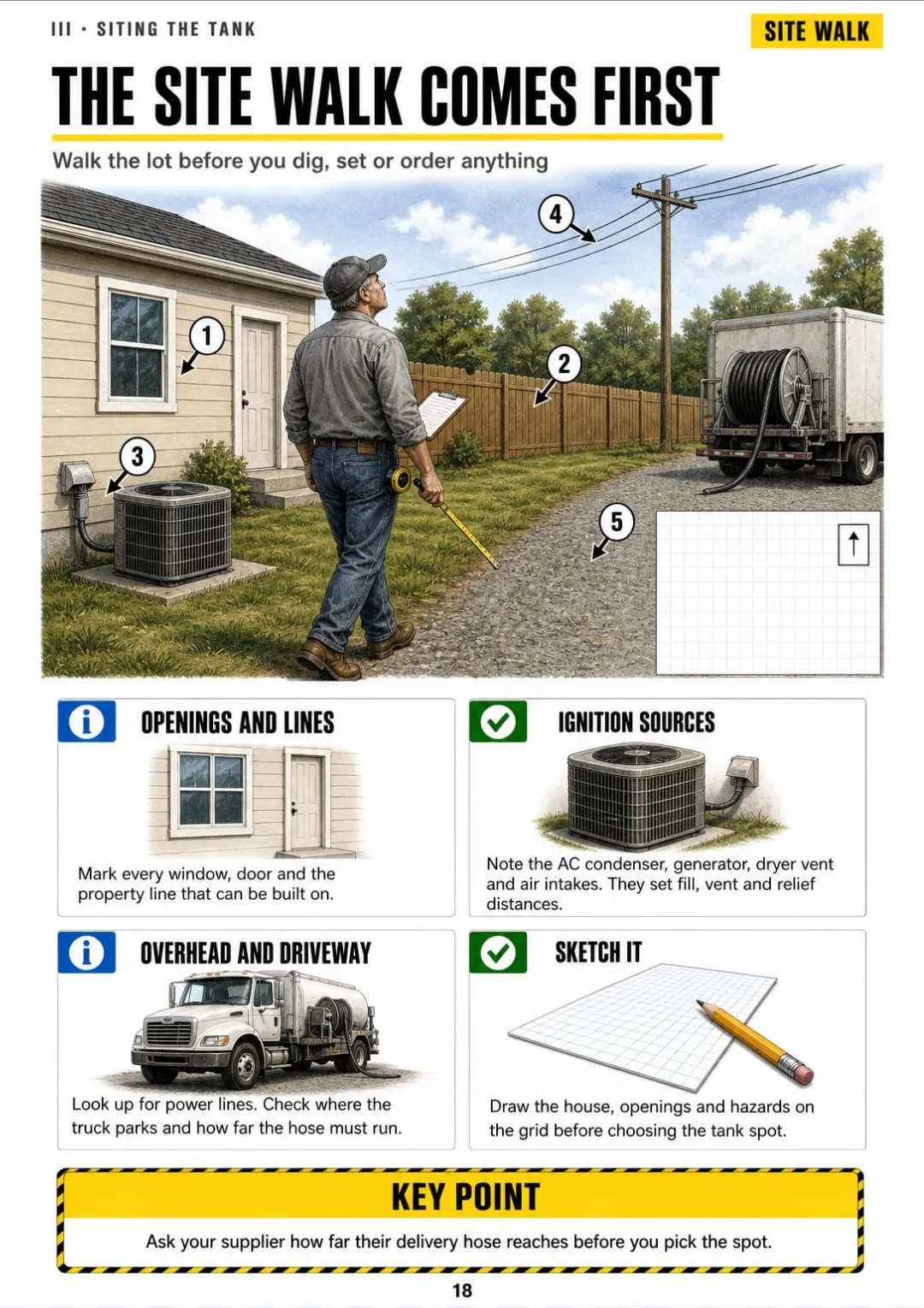
The site walk: openings, property lines, ignition sources, overhead lines and hose reach.
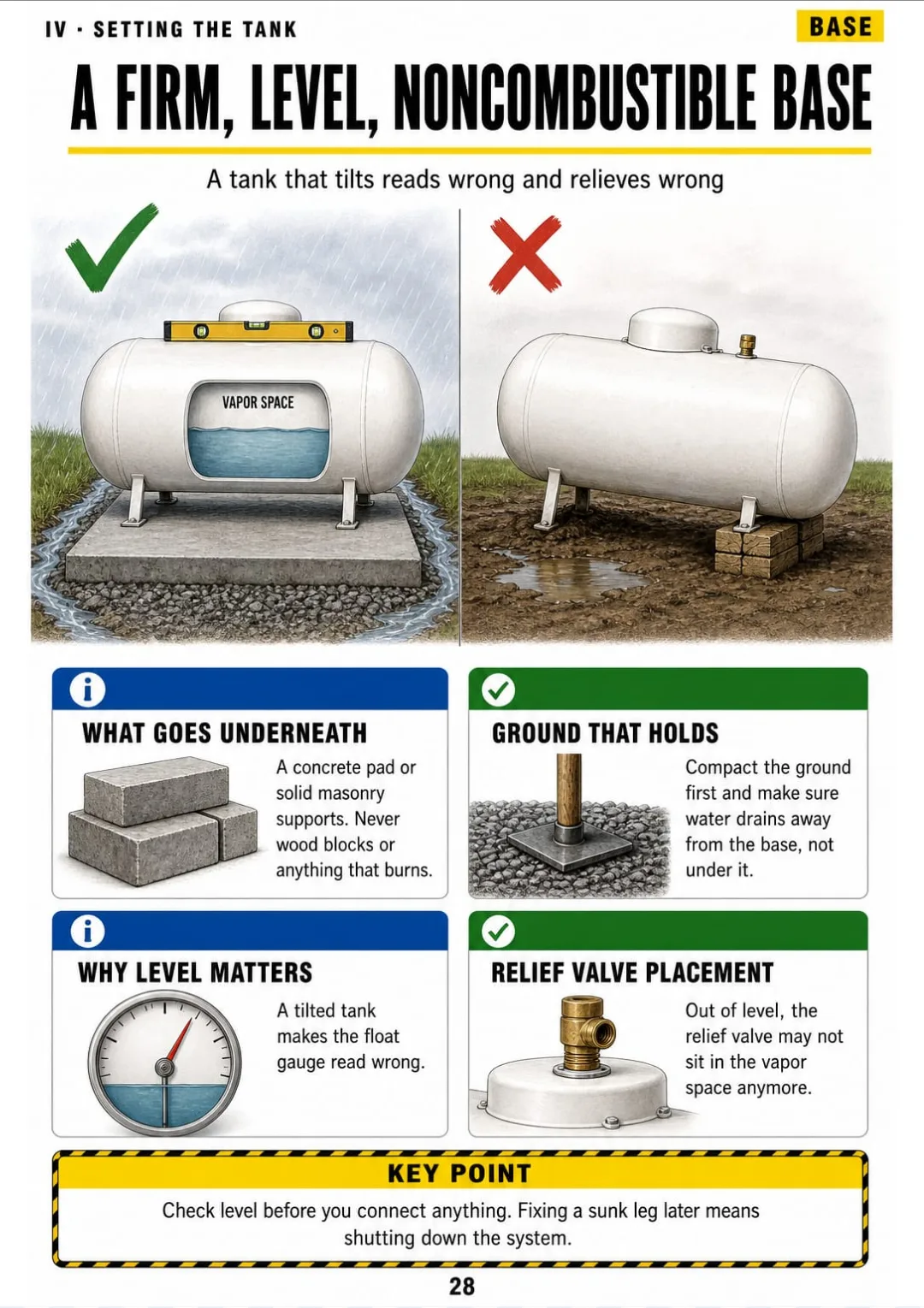
Concrete or masonry on compacted, draining ground, and level so the gauge and relief valve work.
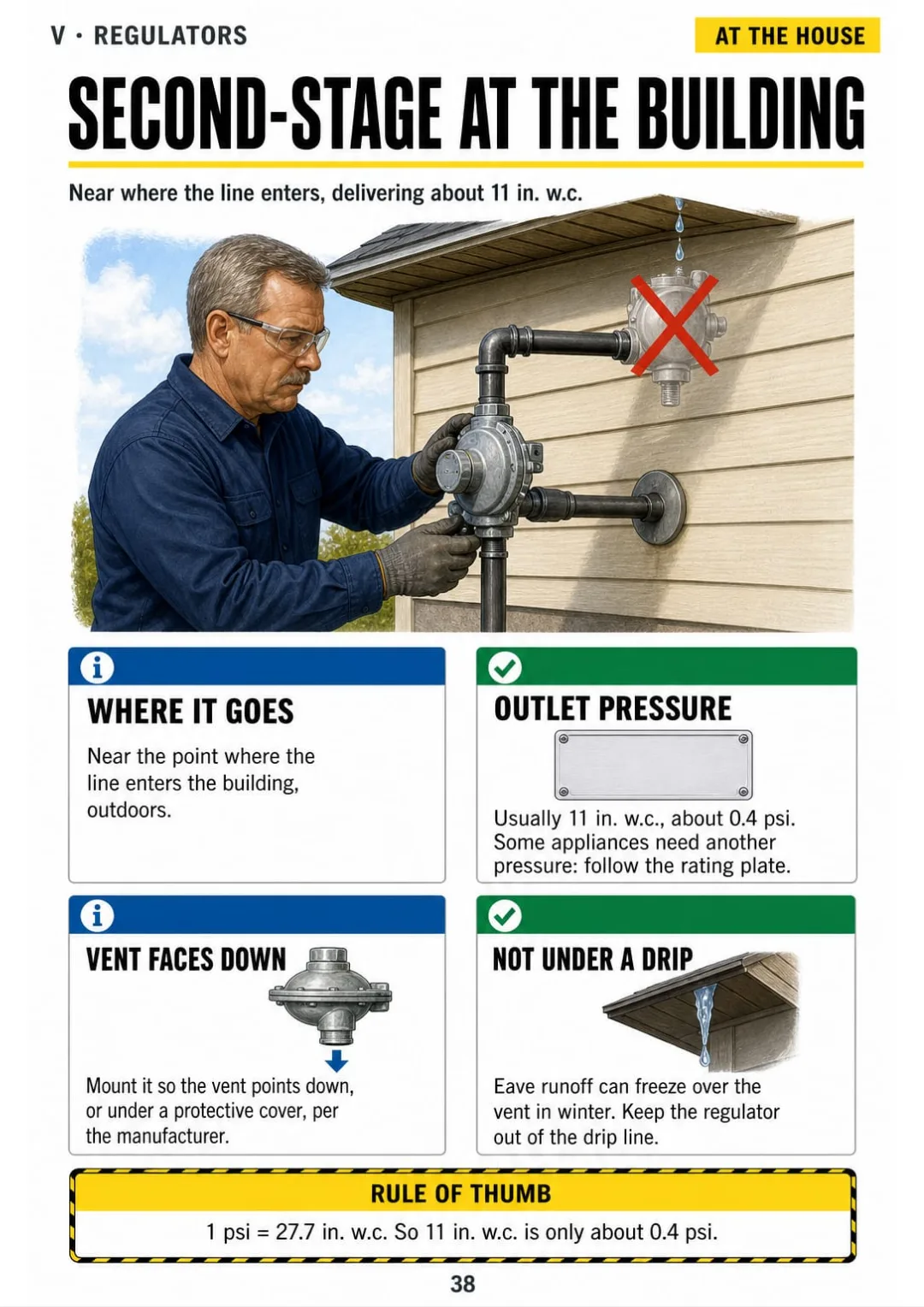
Second stage at the wall: about 11 in. w.c., vent down, away from eave drips.
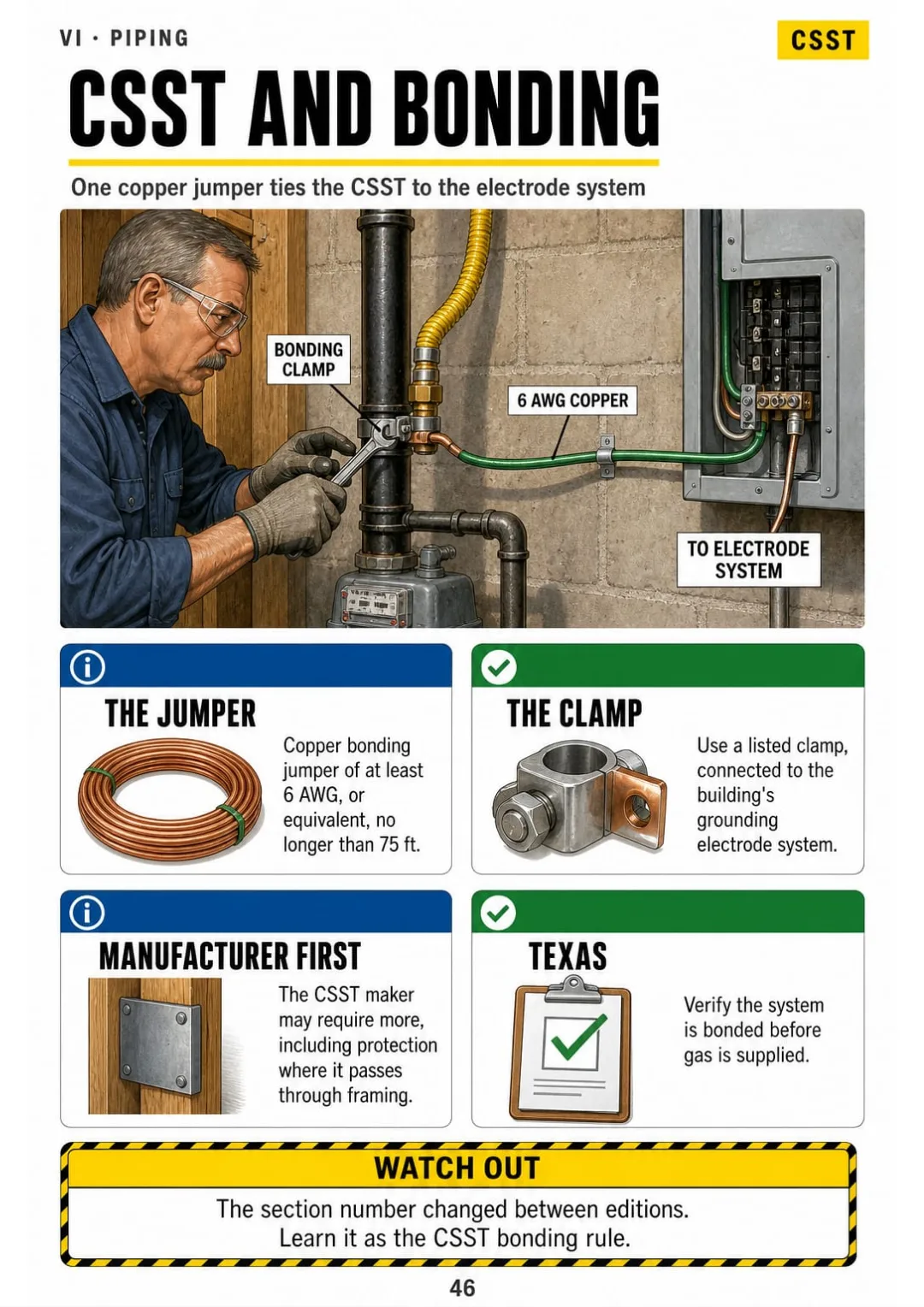
CSST bonding: at least 6 AWG copper, 75 ft maximum, listed clamp, to the grounding electrode system.
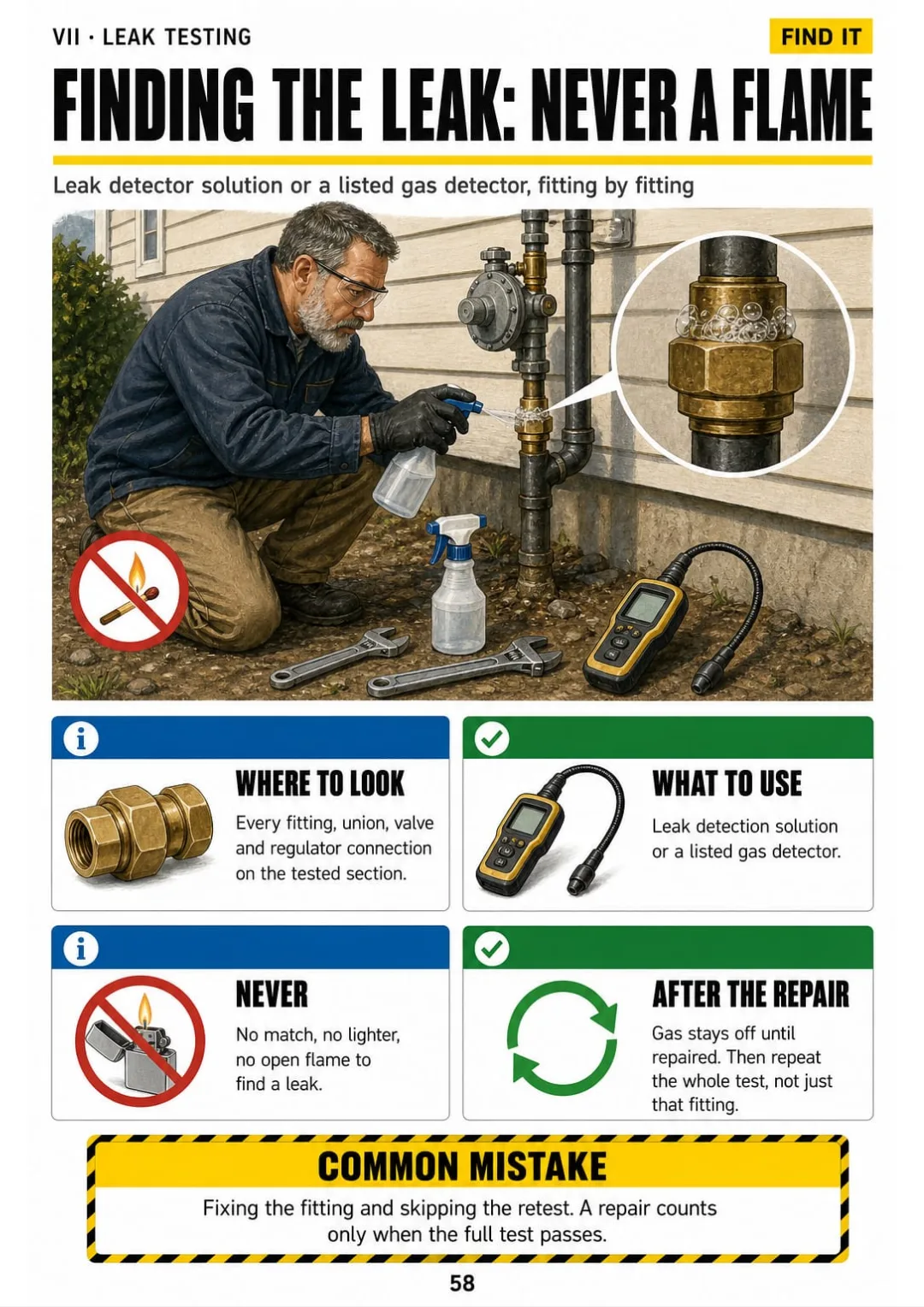
Bubbles at a flare fitting: solution or detector, never an open flame
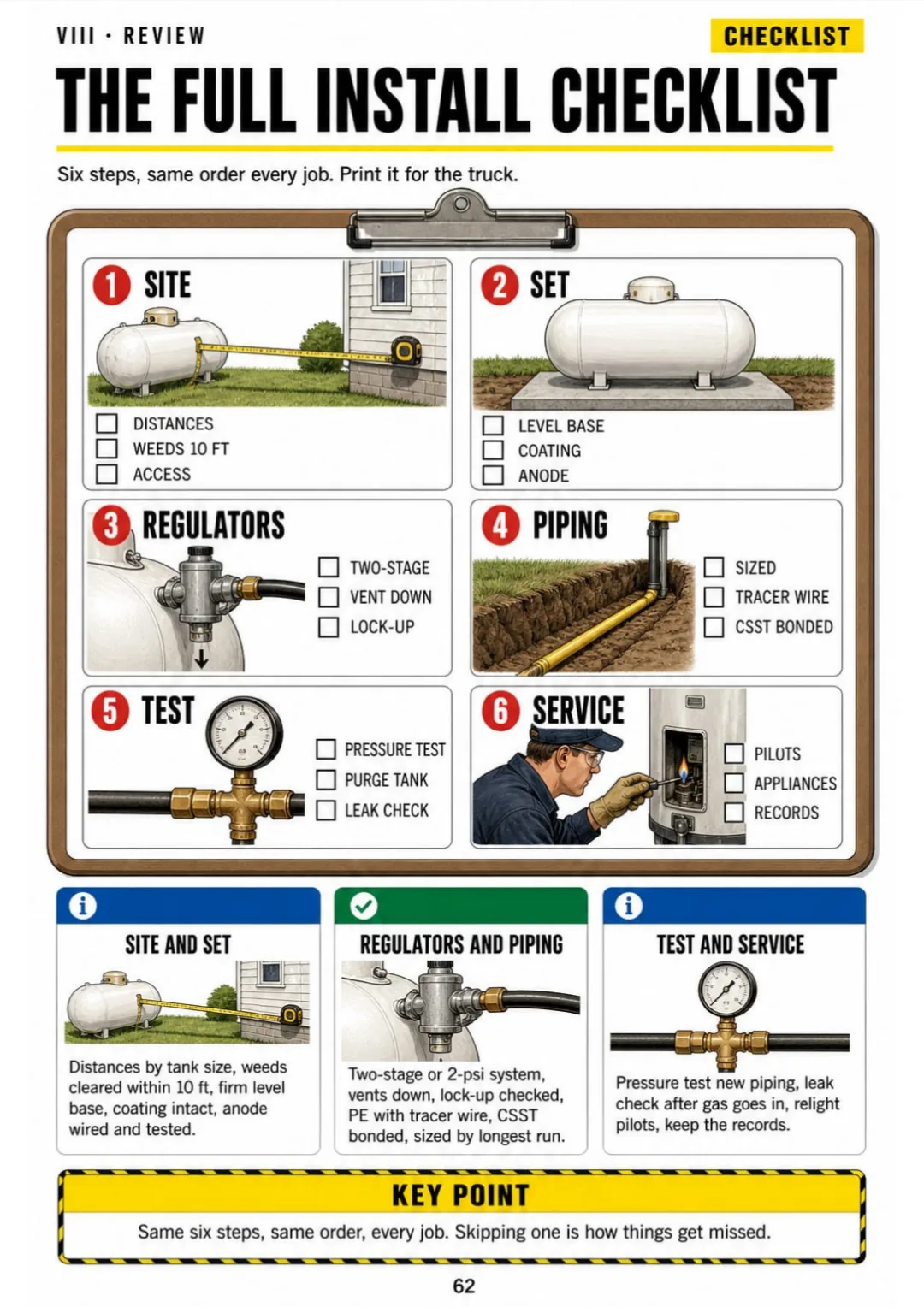
Site, Set, Regulators, Piping, Test, Service: one checklist for the whole job

Swipe to see more →

These are real pages from the book. The table of contents is the full one: 8 parts and 63 topics.

The Problem Isn't You. It's How It Was Explained to You.

You're standing in a customer's yard with the work order in your hand, and you have to pick the tank spot before the truck shows up.

Windows and doors, the property line, the AC unit, the power lines overhead, how far the hose will reach. The manual covers each one in a different chapter, in paragraphs that never put the yard together.

The site walk: openings, property lines, ignition sources, overhead lines and hose reach.

In the book, the site walk is one page: the house, the yard and the tank drawn from above, with every check labeled on the drawing: openings, property lines, ignition sources, overhead lines and hose reach.

The same goes for the base under the tank, the two regulator stages, pipe materials and the pressure test vs. the leak check: each one gets its own page.

You look at the yard, you picture the page, and you walk the site in the same order without going back to the manual.

COMPARE FOR YOURSELF

Same Topic, Two Ways to Study It

THIS
  • The manual: line after line
  • Pressures and boiling points explained only in words
  • You walk into the exam with doubts
Liquefied petroleum gas is stored in the container as a liquid under its own vapor pressure, with a vapor space maintained above the liquid surface. Because the normal boiling point of propane is approximately −44 °F, the product vaporizes at all ordinary ambient temperatures, and container pressure varies with the temperature of the liquid rather than with the quantity remaining, reaching approximately 110 psig at 70 °F and approximately 170 psig at 100 °F; accordingly, pressure gauge readings shall not be relied upon to determine container contents.
FOR THIS
  • What propane does in the tank, in one drawing
  • 110 psig at 70 °F, 170 at 100 °F, in one box
  • The gauge shows pressure, not what's left: drawn on the tank
Propane boils at −44 °F: about 110 psig at 70 °F, about 170 psig at 100 °F.
CONTENTS

Take a Look at the 8 Parts and 63 Topics

The whole system, propane and the tank, siting distances, setting aboveground and underground, regulators, piping and line sizing, leak testing and placing in service, and a final review: 67 pages, all illustrated.

IThe Whole System at a Glance · pp. 5-10
  1. The propane vapor system, start to finish
  2. Who may do this work
  3. The two codes and your state
  4. Words you'll hear on day one
  5. DOT cylinders vs. ASME tanks
  6. The install route: six steps in the same order
IIPropane and the Tank · pp. 11-17
  1. What propane does inside the tank
  2. Heavier than air, and it smells on purpose
  3. Why a tank is filled to about 80%
  4. Vaporization: why a small tank freezes up
  5. Map of the tank fittings
  6. The nameplate: read it before you set the tank
  7. Cylinders on site: setting and clearances
IIISiting the Tank: Distances in Feet · pp. 18-27
  1. The site walk comes first
  2. How distances are measured
  3. Under 125 gallons
  4. 125 to 500 gallons aboveground: 10 ft
  5. 501 to 2,000 gallons aboveground: 25 ft, and the 10-ft exception
  6. Underground and mounded tanks: 10 ft
  7. Relief valve discharge and building openings
  8. Fill connection and gauge vent: 10 ft
  9. Combustibles, other tanks and what can't go nearby
  10. Worked site plan: putting it all together
IVSetting the Tank: Aboveground and Underground · pp. 28-35
  1. Aboveground: a firm, level, noncombustible base
  2. Vehicle protection and delivery access
  3. Underground: the excavation in cross-section
  4. Coating and handling an underground tank
  5. Anodes: how cathodic protection works
  6. Testing the anode: the −0.85 V reading
  7. Isolating the tank from the house piping
  8. High water table: flotation and backfill
VRegulators · pp. 36-43
  1. Why two stages
  2. First-stage regulator at the tank
  3. Second-stage regulator at the building
  4. Integral two-stage and 2-psi systems
  5. The regulator vent points down
  6. Regulator vent clearances
  7. Lock-up: what the manometer tells you
  8. Regulator trouble by symptom
VIPiping and Line Sizing · pp. 44-52
  1. Pipe materials and where each one goes
  2. Underground PE pipe, risers and tracer wire
  3. CSST and bonding
  4. Sizing step 1: add up the BTU load
  5. Sizing step 2: measure the longest run
  6. Sizing step 3: read your code's sizing table
  7. Worked example: a ranch house at 11 in. w.c.
  8. Worked example: the 10 psig line from tank to house
  9. Sediment traps and appliance shutoffs
VIILeak Testing and Placing in Service · pp. 53-61
  1. Pressure test vs. leak check: two different jobs
  2. The pressure test, step by step
  3. The manometer: reading inches of water column
  4. Low-pressure leak check with a manometer
  5. High-pressure side leak check
  6. Finding the leak: solution, never flame
  7. A new tank: purging air before the first fill
  8. Placing the system in service
  9. Out of gas and interruption of service
VIIIReview: Checklists and Common Mistakes · pp. 62-67
  1. The full install checklist
  2. Every distance on one page
  3. Every pressure on one page
  4. Common siting and setting mistakes
  5. Common regulator, piping and test mistakes
  6. How to review the night before

One Page, One Topic, All Clear

Think of it this way:

The pipe is in, the regulators are on, and your supervisor hands you the gauge and waits for the pressure test.

You open the book to that page and see the two jobs drawn side by side: the pressure test with air or inert gas, at 1.5 times working pressure and never below 3 psi, and the leak check right next to it.

Second stage at the wall: about 11 in. w.c., vent down, away from eave drips.

Same with tank distances in feet, the underground tank in cross-section, anodes, the two regulator stages and line sizing: each one on its own page.

Propane Tank Installation Illustrated is 8 parts and 63 topics, all drawn, and it ends with the full install checklist, every distance and every pressure on one page, and the most common mistakes.

What you see drawn, you don't have to memorize.

What's Inside Propane Tank Installation Illustrated:

Ipp. 5-10

The Whole System at a Glance

The vapor system from tank to appliance, who may do the work, the two codes and your state, day-one vocabulary, DOT cylinders vs. ASME tanks and the six-step install route.

IIpp. 11-17

Propane and the Tank

What propane does inside the tank, why it's heavier than air and smells on purpose, the 80% fill, vaporization and freeze-up, the tank fittings, the nameplate and cylinders on site.

IIIpp. 18-27

Siting the Tank: Distances in Feet

You walk any yard in one order and know each distance in feet: the site walk, how distances are measured, each tank size with its distance, underground and mounded tanks, relief valve discharge, fill and gauge vent, combustibles and a worked site plan.

IVpp. 28-35

Setting the Tank: Aboveground and Underground

The aboveground base, vehicle protection and delivery access, the excavation in cross-section, coating and handling, anodes and the −0.85 V reading, isolation from house piping and high water tables.

Vpp. 36-43

Regulators

Why two stages, first and second stage, integral two-stage and 2-psi systems, the vent that points down and its clearances, lock-up on the manometer and regulator trouble by symptom.

VIpp. 44-52

Piping and Line Sizing

Pipe materials and where each goes, PE, risers and tracer wire, CSST and bonding, line sizing in three steps, two worked examples, sediment traps and appliance shutoffs.

VIIpp. 53-61

Leak Testing and Placing in Service

Pressure test vs. leak check, the test step by step, reading inches of water column, low- and high-pressure leak checks, finding a leak, purging a new tank, placing in service and out-of-gas calls.

VIIIpp. 62-67

Review: Checklists and Common Mistakes

The full install checklist, every distance and every pressure on one page, the most common siting, setting, regulator, piping and test mistakes, and how to review the night before.

At the end of the book: The full install checklist, every distance and every pressure on one page, and the most common installation mistakes.

Plus: 2 Free Books

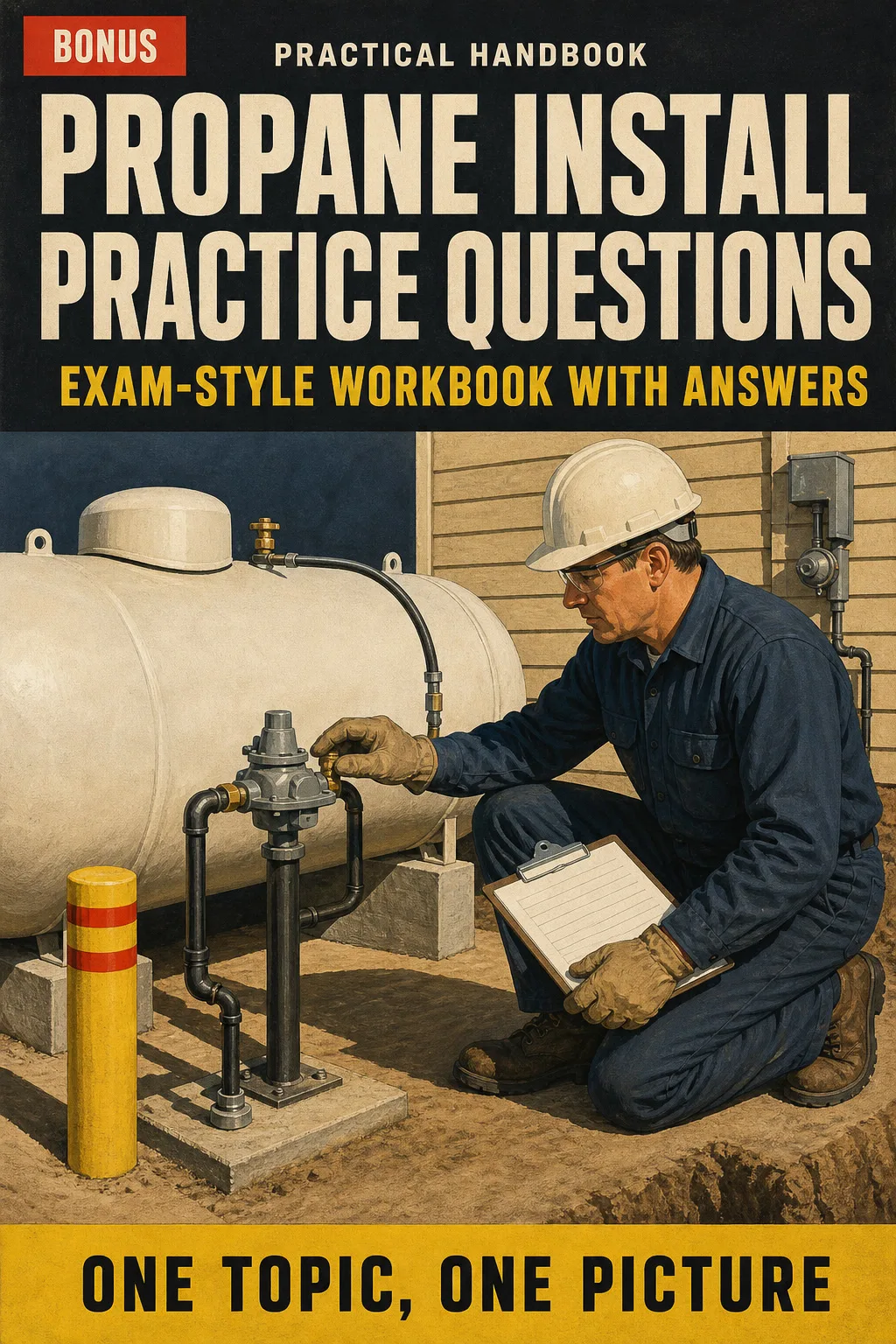
Propane Install Practice Questions: Exam-Style Workbook with Answers

BONUS 1: «Propane Install Practice Questions: Exam-Style Workbook with Answers»

Value on its own: US$ 17.90

Test yourself on distances, regulators, line sizing and leak testing, then check every answer with a short explanation and the page to review.

15 Common Installation Mistakes: Before & After Cards

BONUS 2: «15 Common Installation Mistakes: Before & After Cards»

Value on its own: US$ 14.90

See the most frequent installation mistakes drawn next to the right way, so you can spot them on the job before your supervisor does.

Propane Tank Installation Illustrated with 2 Free Books

  • Propane Tank Installation Illustrated: 67 illustrated pagesUS$ 63
  • BONUS 1: Propane Install Practice Questions: Exam-Style Workbook with AnswersUS$ 17.90
  • BONUS 2: 15 Common Installation Mistakes: Before & After CardsUS$ 14.90
  • High-resolution PDF to printIncluded
Total value US$ 95.80
YOUR PRICE:
US$ 27
You save US$ 68.80
YES, I WANT PROPANE TANK INSTALLATION ILLUSTRATED FOR US$ 27

📄 This is a digital PDF book sent to your email: nothing is printed or shipped.

Secure purchaseEncrypted payment30-day guarantee

PDF by email: We email you Propane Tank Installation Illustrated as a PDF, together with the two free books. It's a single payment: no installments, no extra charges.

Who This Book Is For

You just started at a propane company

You just started at a propane company

You see the whole system at a glance before your first install, and you learn the job in the same order you'll do it: site, set, regulators, piping, test, service.

Your state LP-gas exam is coming up

Your state LP-gas exam is coming up

Distances, regulator pressures and test pressures each have their own page, so you can review them at night without everything blurring together.

You already set tanks

You already set tanks

You know the work with your hands. The book gives you the why behind each step, drawn, so you can explain it to a supervisor or an inspector.

Everything You Get Today

US$ 95.80US$ 27
YES, I WANT PROPANE TANK INSTALLATION ILLUSTRATED FOR US$ 27

📄 This is a digital PDF book sent to your email: nothing is printed or shipped.

30DAYS
GUARANTEE

30-Day Guarantee

Try Propane Tank Installation Illustrated for 30 days, bonus books included.

We refund everything if the file won't open, if the book isn't what you see here, if you were charged twice or if the email doesn't arrive. Just email us.

You pay once. No subscriptions.

Frequently Asked Questions

Is it for me if I came to propane from the bobtail, HVAC or plumbing?

Yes. It's written for adults who already work in the trade or just joined a propane company. It starts with the whole system at a glance, so you don't need to have set a tank before, and it doesn't talk down to you if you have.

Does it work for my state's LP-gas exam?

It's built on the current editions of NFPA 58 and NFPA 54 / ANSI Z223.1, the codes state LP-gas rules are based on, and it points out where your state can add its own rules. Always check the edition your state has adopted and your local authority having jurisdiction. Everything is redrawn and explained in plain words; no code text or tables are reproduced.

Is this official material?

No. It's an independent illustrated study book. It isn't issued, approved or endorsed by NFPA, the industry training program or any state agency, and it doesn't give you a certificate, a license or training credit. It's for studying and reviewing.

Does it replace my company's training or the industry course?

No. It helps you review what you learn in training and on the job. Work on gas systems is for trained, authorized personnel, and the current code and your local authority always have the final word.

Are the practice questions the ones on the exam?

No. The practice questions are written for this book to help you review distances, regulators, line sizing and leak testing. They are not official exam questions.

When and how do I get it?

The book and the 2 bonus books arrive as PDFs by email, at the address you enter at checkout.

Do I have to pay every month?

No. It's a one-time payment. There's no subscription.

Can I print it?

Yes. The PDFs are made to print, so you can keep a copy in the truck.

How does the refund work?

You have 30 days. We refund everything if the file won't open, if the book isn't what you see on this page, if you were charged twice or if the email doesn't arrive: just email us.

Before You Close This Page

No more rereading the code with nothing sticking.

The site walk, the regulators and the pressure test: you see them drawn, and that's it.

You get to the exam and the job knowing where everything is.

Drawings make studying faster.

The book is right below.

One-time payment: US$ 27 · Guarantee: 30 days · PDF by email

YES, I WANT PROPANE TANK INSTALLATION ILLUSTRATED FOR US$ 27

📄 This is a digital PDF book sent to your email: nothing is printed or shipped.